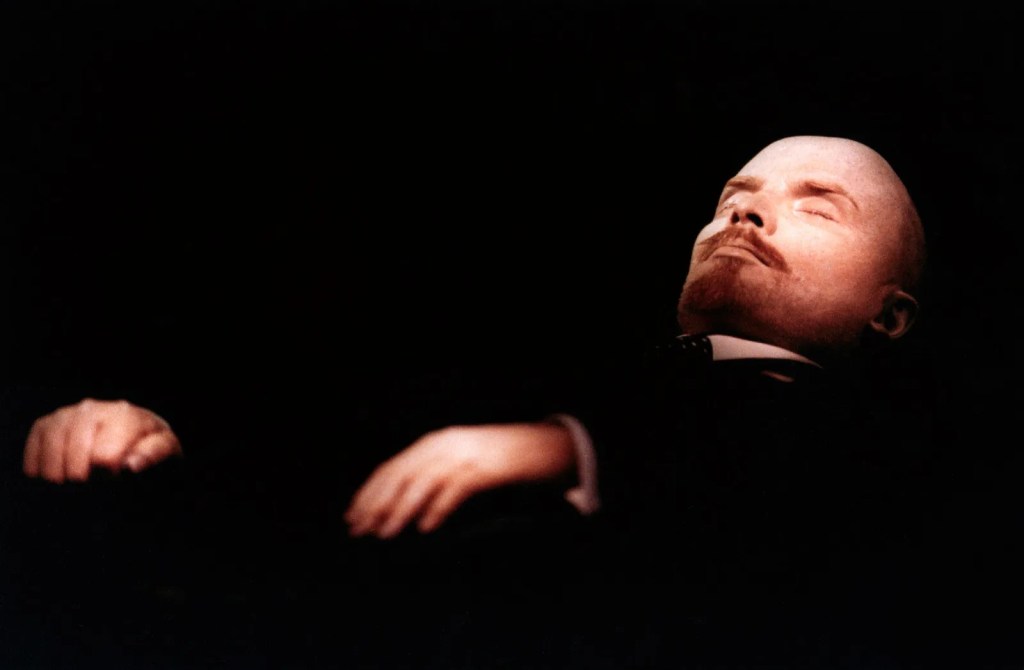
Nestled in the vibrant heart of Moscow is the preserved body of a man who truly transformed the world: Vladimir Lenin, the visionary architect of the Soviet Union. Even though he passed away a century ago, his body remains a remarkable symbol of history—mummified, encased in glass, and proudly displayed in Red Square, inviting visitors from around the globe to learn from the past. The choice to mummify Lenin was not merely a scientific endeavor; it was a heartfelt commitment to immortalizing his legacy, ensuring that he—and the spirit of the Soviet state—continues to inspire conversations and reflections for many generations to come!
Vladimir Lenin, originally known as Vladimir Ilyich Ulyanov, was born in 1870 and died in 1924 when the Soviet Union was still in its infancy, navigating through its early struggles and establishing its ideologies. After his death, other key Soviet figures, such as Joseph Stalin, were extremely keen on preserving his legacy as the figurehead of communism, understanding that his image would solidify their own power and the party’s direction. Despite his wishes to have a simple burial in Saint Petersburg, reflecting his unpretentious nature and revolutionary ideals, the decision was made to embalm his body and display it for everyone to see inside a delicate mausoleum, which became a symbol of state reverence and propaganda, attracting millions of visitors over the decades and turning him into an enduring icon of the socialist movement.
And so, under the direction of leading Soviet biochemists of the time, Lenin’s body was embalmed using a combination of glycerin, formaldehyde, and potassium acetate in order to preserve his young look for decades to come, ensuring that future generations would be able to pay their respects to the revolutionary leader in a state that appeared almost lifelike. During this meticulous process, they removed and dissected his brain, revealing he suffered from severe sclerosis, a fact that sparked intense discussions among scientists and historians about the implications of this finding on his health and political decisions. As you might imagine, routine maintenance has had to be done on the body to this day in order to keep it from visibly decaying, requiring trained specialists to periodically assess and treat the remains to prevent deterioration. My Soviet history professor even remarked that on his own recent trip to Moscow, Lenin looked ‘notably mushy,’ an observation that underscores the ongoing struggle between the desire to maintain an icon and the inevitable passage of time.
The decision to mummify Lenin was not without controversy, however. Lenin’s wife, Nadezhda Krupskaya, was very opposed to his embalmment, as were other close colleagues within the Soviet Union who viewed this act as a violation of his wishes and of his legacy. Yet, despite opposition from these figures, the Communist Party went ahead and mummified him for eternal viewing, primarily due to the leadership of Joseph Stalin, who meticulously planned the entire mortuary process, seeing it as a strategic move to consolidate power. By presenting Lenin’s preserved body to the public, Stalin aimed to create a sense of permanence and reverence around the revolutionary leader, thus using the occasion to solidify his own place in the party for years to come. This act became a symbol of the larger-than-life persona that Lenin had within the Soviet narrative, intertwining his legacy with the power dynamics of the era and shaping the ideological landscape of the nation.
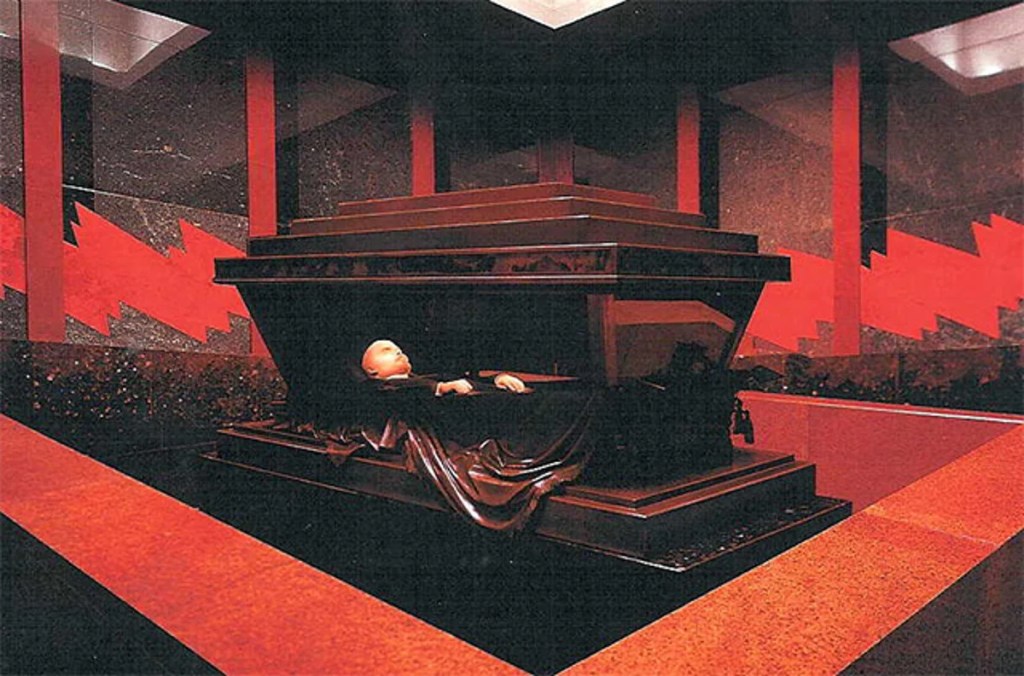
Lenin’s body continues to be on display, even after the U.S.S.R. faded away over thirty years ago. His striking granite mausoleum, completed in 1933, once drew devoted communists but now stands as a fascinating reminder of Russia’s unique history. A full century since his passing, there are some encouraging discussions about finally honoring the eternal leader with a proper burial, which could bring closure. His body remains a symbol of a past nation, but it’s also a testament to a legacy that will always inspire reflection and conversation about the future.
 John's History Corner
Leave a comment